

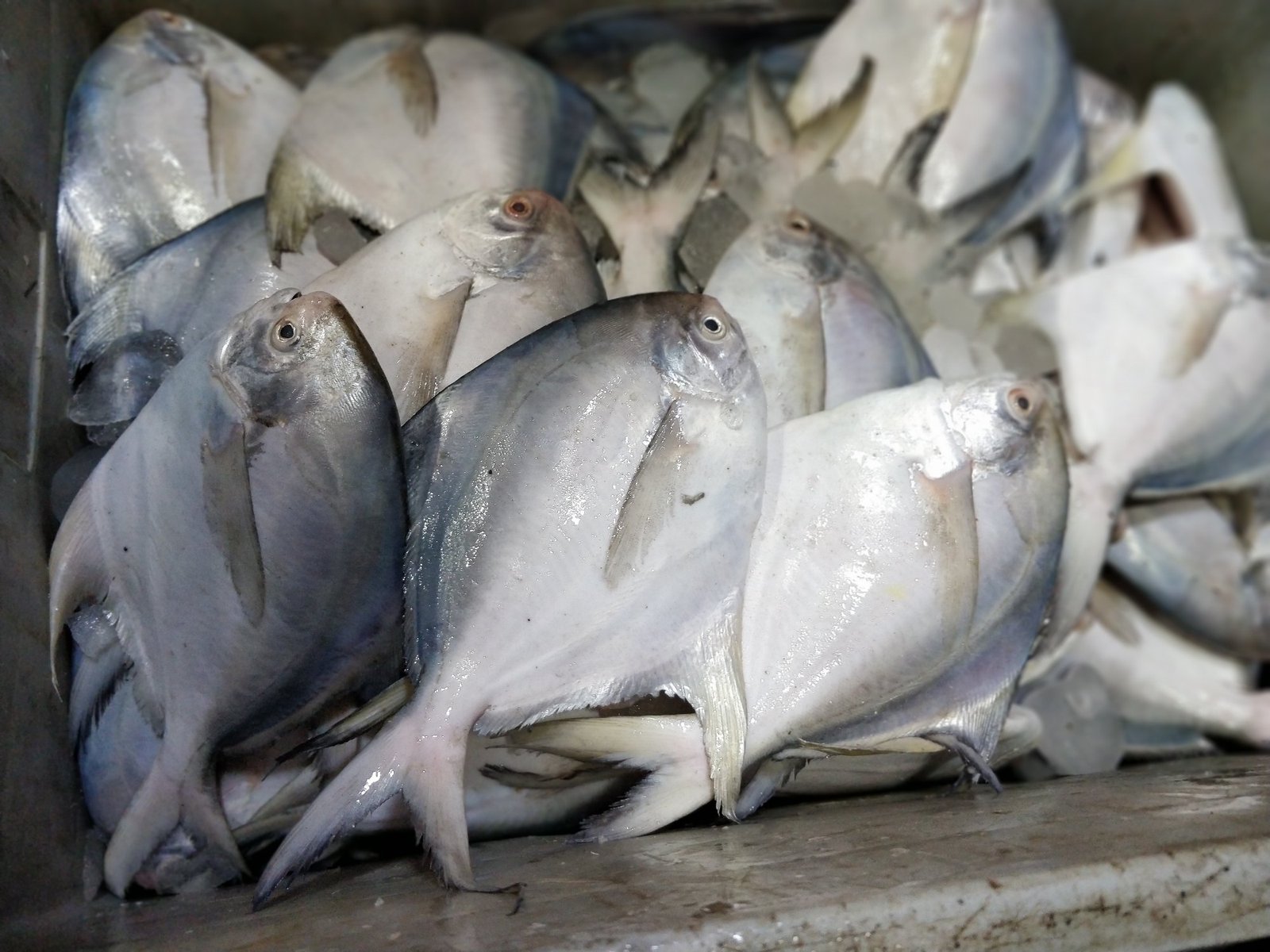
Despite Silver Pomfret being given “State Fish” status, effective measures to curb juvenile fishing have yet to be implemented.
Mumbai: The Silver Pomfret (Saranga), which holds the title of Maharashtra’s State Fish, is now on the verge of becoming scarce. Production of the species has dropped significantly over the past twelve years, with average yields reduced to just 20–30 percent of earlier levels. The prized “Super Pomfret” variety, which commands high export demand and provides maximum income to fishermen, has seen a 95% decline, with production now down to a mere 5 percent.
According to fisherfolk leaders, two key factors are behind this sharp fall: the indiscriminate capture of juvenile pomfrets through traditional “kav” fishing methods, and unregulated, profit-driven overfishing. Despite Silver Pomfret being given “State Fish” status, effective measures to curb juvenile fishing have yet to be implemented.
Demands for Independent Enforcement Wings to Protect Fishes
States like Kerala have already set up independent enforcement wings to prevent illegal fishing and protect rare fish species. Fishermen in Maharashtra are now demanding a similar unit to monitor and stop practices such as purse seine fishing, LED light fishing, and fishing during the seasonal ban.
Currently, Maharashtra observes a two-month fishing ban from May 31 to August 1. Fishermen’s associations are urging the government to extend this ban by at least 15 days to a month and ensure stricter enforcement during the period. They have also called for increased awareness campaigns among fishermen to prevent the catching of juvenile pomfrets.
Meanwhile, the fisheries department has begun deploying drones to monitor the seas during the ban period. Initial efforts have shown partial success in preventing violations, but experts stress the need for complete enforcement to allow fish populations to recover.
Pomfret is categorized by weight, with fish above 500 grams classified as ‘Super Saranga’, followed by grades of 350–500 g (No. 1), 200–350 g (No. 2), 100–200 g (No. 3), and below 100 g (No. 4).