

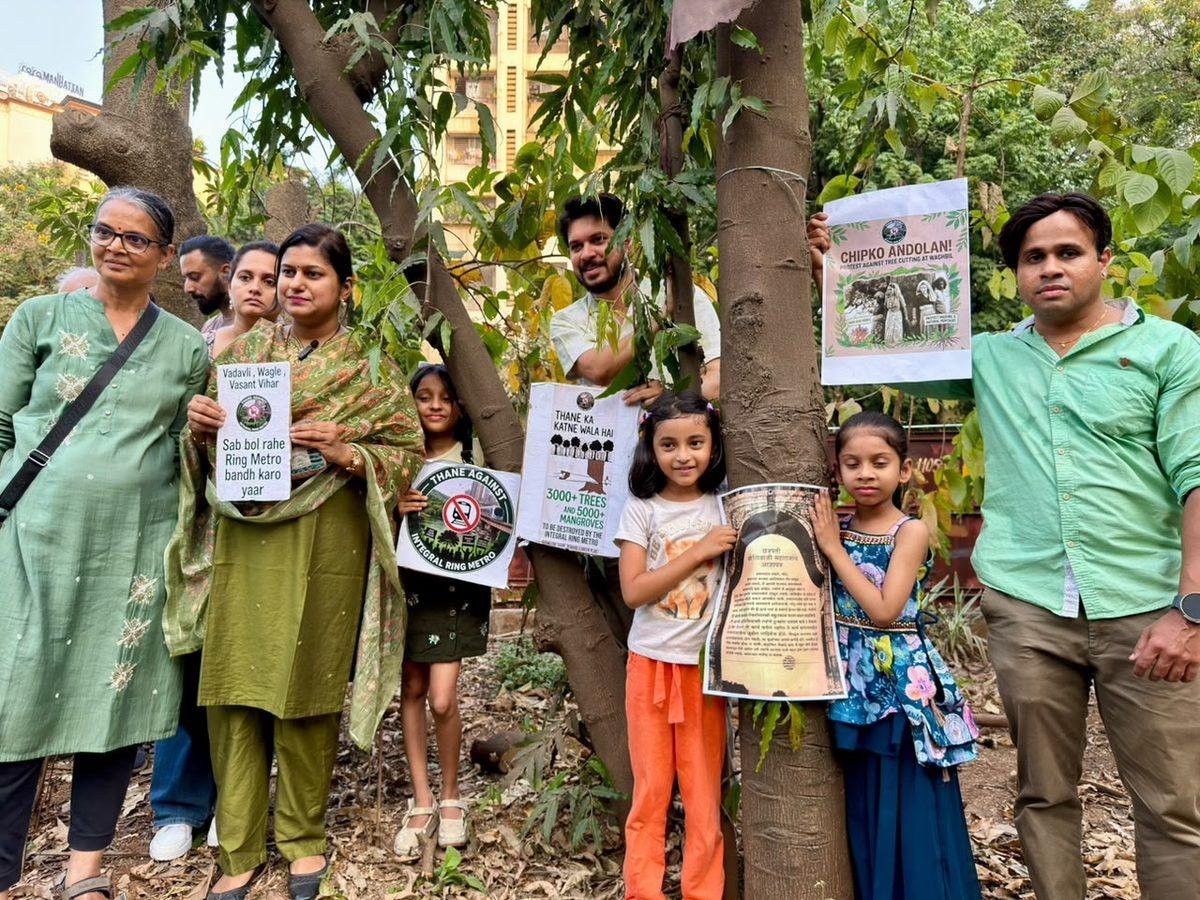
Thane, October 10, 2026: Hundreds of Thane residents, many of them from Waghbil, held a Chipko Andolan on Saturday against the felling of trees for the proposed Thane Integral Ring Metro.
Organised by Thane Against Integral Ring Metro (TAIRM), the protesters, dressed in green, marched from Chulha Village Circle towards Waghbil Circle. Women, senior citizens and children embraced trees and held placards reading “Sab bol rahe Ring Metro bandh karo yaar” and “We don’t have dam for water and you give us Ring Metro”.
According to the organisers, the project threatens 3,224 trees across Thane. Tree felling has already begun at Waghbil, which residents described as the first visible on-ground impact of the circular metro line.
Citizens questioned the need to sacrifice thousands of trees in a city already struggling with traffic congestion, shrinking green spaces and rising environmental pressure. The demonstration remained peaceful throughout.
“What we are witnessing at Waghbil is the first visible and alarming impact of the proposed Ring Metro,” said Adv. Radhika Prakash Rane, organiser of TAIRM. “Our green dress code today was a symbol of solidarity with the trees that have already been cut and those that are still standing but remain under threat. We cannot call something development if it compromises our environment and the quality of life of future generations.”
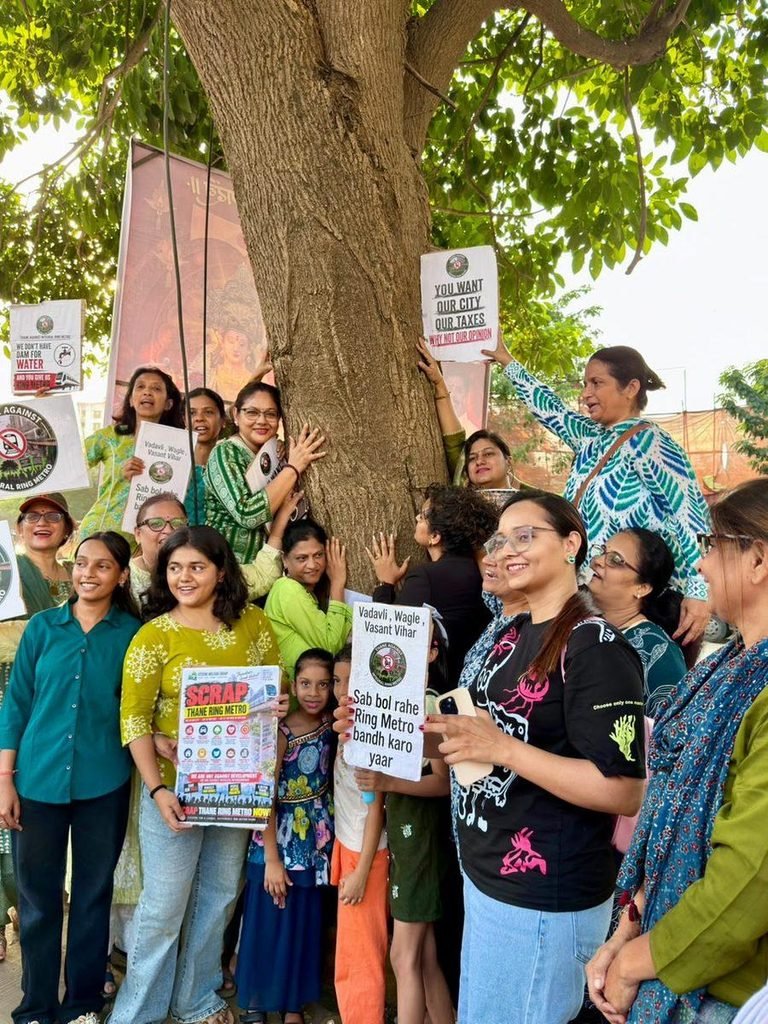
Rane said TAIRM firmly demands that the project be scrapped and urged authorities to prioritise sustainable, practical and environmentally responsible transport solutions.
Eighty-year-old Anand Chaubal travelled from Tembhi Naka to join the protest. “The trees of Thane belong to all of us, and protecting them is everyone’s responsibility. This is not merely a Waghbil issue; it is an issue concerning every Thanekar,” he said. “I appeal to the authorities to listen to citizens and reconsider this project before more trees are lost.”
Waghbil resident Foram Koli said it was painful to see trees being felled in her own neighbourhood. “We are the people who will directly experience the consequences of losing this green cover,” she said. “We want development that improves our lives, not one that takes away the greenery that makes our neighbourhood liveable.”