
In this culture, property is inherited not by sons but by daughters. As a result, men are required to leave their parental homes and live with their wives’ families after marriage.
Across the world, marriage traditions vary widely. In most societies, it is the bride who moves into her husband’s home after marriage. This age-old practice continues in many parts of India as well. However, there is one Indian state where the custom is exactly the opposite — here, it is the groom who shifts to his wife’s home.
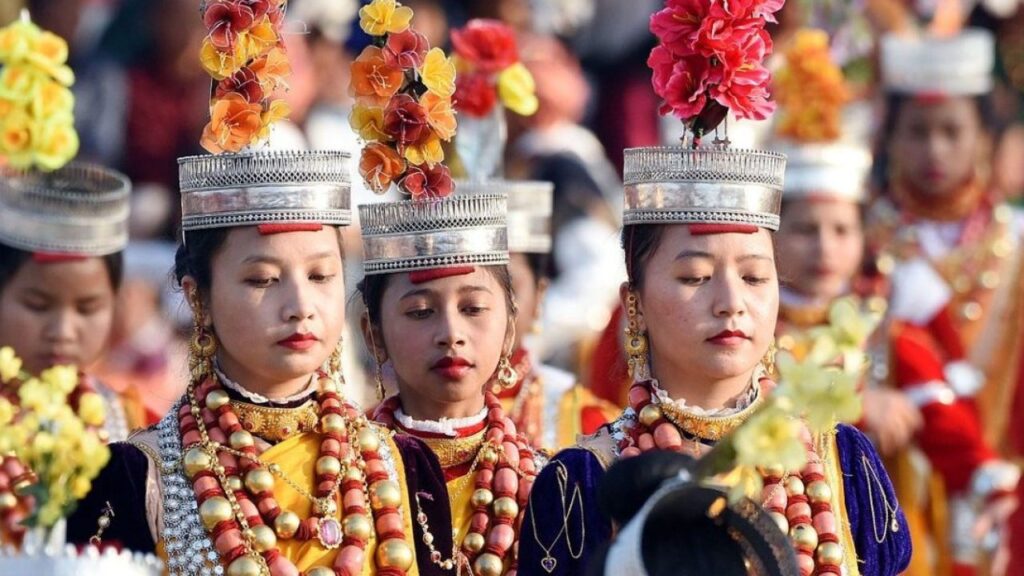
This unique tradition is followed in Meghalaya, particularly among the Khasi community, which follows a matrilineal system. In this culture, property is inherited not by sons but by daughters. As a result, men are required to leave their parental homes and live with their wives’ families after marriage. They also take their mother’s surname, and importantly, the community does not follow the practice of dowry.
Women Hold the Power
The Khasi tribe celebrates the birth of a girl, while the birth of a boy is considered less auspicious. Women play a central role in family and community life. They run vegetable markets, meat shops, and even liquor businesses, making them financially independent. Khasi women are also allowed to marry multiple times if they choose.
Daughters Inherit Property
In this system, daughters inherit their parents’ wealth and take responsibility for family duties. Women also hold authority in making major household and social decisions. This matrilineal structure is believed to have been established to maintain balance within the community.
Though some men have raised demands to change these traditions, the system continues to remain strong in Meghalaya even today.


